
The Silence Before the Turn

In Casino Royale's poker scene, the tension is built not through dialogue but through the deliberate pacing of glances, card reveals, and the weight of silence. The scene's dramatic purpose is to externalize Bond's internal calculation and vulnerability, transforming a card game into a psychological duel.

Casino Royale (2006) Director: Martin Campbell Scene: The high-stakes poker game at Casino Royale

How Film Review Space Reads a Scene

Dramatic Purpose

Every scene serves a narrative function, whether it advances plot, reveals character, or establishes theme. We begin by asking what the scene is trying to achieve within the film's larger structure. Scenes can establish stakes, create tension, or provide relief. Understanding purpose helps evaluate the scene's effectiveness, and we consider how the scene contributes to the film's overall arc.

Blocking and Camera

The physical movement of actors and the camera's placement create meaning. We analyse how blocking directs attention, reveals power dynamics, and shapes the audience's emotional response. Blocking can show dominance or vulnerability through positioning. Camera angles and movement influence how we perceive characters, and the frame itself becomes a storytelling tool.

Editing and Rhythm

The pace of cuts controls tension and information. We examine how editing choices—shot length, juxtaposition, and transitions—create rhythm and guide the viewer's focus. Fast cutting can heighten anxiety, while long takes build suspense. Editing can manipulate time and space within a scene, and the rhythm of cuts often mirrors the emotional state of characters.

Sound and Silence

Sound design is often overlooked but crucial to scene impact. We analyse how music, ambient noise, and silence shape atmosphere and underscore emotional beats. Silence can be more powerful than music in high-stakes moments. Diegetic sound grounds the scene in reality, and music can manipulate audience expectations.

Further Close Readings

A close-up of a poker table from a player's perspective, showing a hand of cards face down on the felt, lit by a single overhead lamp.

The Final Hand in Rounders

The climactic poker game in Rounders is a masterclass in tension through editing and performance. The scene's blocking and camera work externalize Mike's internal conflict between caution and ambition. The scene uses close-ups on cards and faces to build suspense. Sound design emphasizes the quiet intensity of the moment, and character behaviour reveals the thematic stakes of risk and redemption.

Director: John Dahl · Scene: The final poker game against Teddy KGB

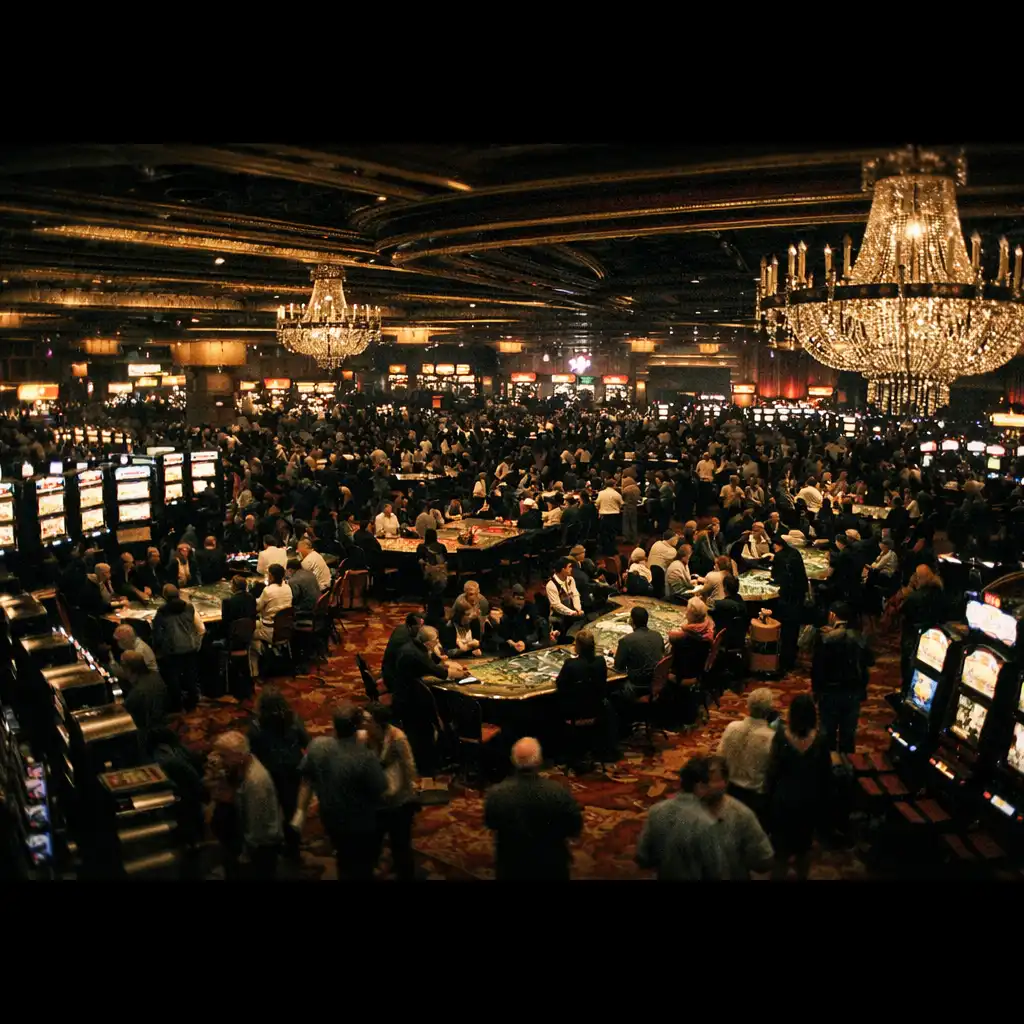
A wide shot of a bustling casino floor at night, seen from a high angle, with rows of slot machines and gaming tables lit by neon and warm overhead lights.

The Casino Floor in Casino

Martin Scorsese's Casino uses the casino floor as a stage for power and corruption. The scene's long tracking shots and layered sound design create a sense of overwhelming opulence and underlying menace. The tracking shot follows characters through the casino, revealing its scale. Sound design layers music, chatter, and slot machines to create a cacophony, communicating the seductive and destructive nature of the casino world.

Director: Martin Scorsese · Scene: The casino floor introduction

The Heist Planning in Ocean's Eleven

The planning sequence in Ocean's Eleven is a lesson in exposition through visual storytelling. The scene's rapid editing and witty dialogue convey complex information while maintaining a light, entertaining tone. The scene uses split screens and quick cuts to show the plan coming together. Sound design includes a jazzy score that underscores the playful tone, and character behaviour reveals the team's camaraderie and expertise.

Director: Steven Soderbergh · Scene: The heist planning montage

Why Scenes Matter

A great film is built scene by scene. In this column, the editor reflects on the power of close reading, arguing that understanding how a scene works deepens our appreciation of cinema as an art form. Scene analysis reveals the intentional choices behind every frame. It allows us to see films not as passive entertainment but as crafted works. The editor shares a personal anecdote about a scene that changed their perspective: the first time they noticed how a single pause in a poker game could say more than a page of dialogue.

— The Editor

“A scene is not a fragment of a story; it is the story compressed into a single, deliberate gesture.”

Continue Reading

Scene Breakdown is just one part of Film Review Space. Explore our Reviews for full film critiques, Characters for deep dives into iconic roles, and Features for long-form essays on cinema and gambling. Reviews offer comprehensive assessments of films. Characters examines the psychology of iconic figures. Features provides in-depth essays on themes and trends.